
Liverpool’s 2025/26 season continues to be very strange on the data front. They managed to generate 1.9 expected goals in their 0-0 draw with Leeds despite rarely looking close to scoring. The spreadsheet says the Reds deserved to win when it was far less clear-cut on the eye test.
There are other concerning outliers. Liverpool’s five worst league or European matches for expected goal difference include their wins at Newcastle and Tottenham, both of whom received a first half red card. Neither side should’ve got close to a positive result yet both had realistic hopes of a point.
A recent graph by the excellent @markrstats highlights the issue. It compares Liverpool with other (mostly big) clubs around Europe in terms of their xG when level or leading. The majority of them create less when in front in order to massively reduce the amount of chances they concede. Not the Reds, who get worse at both ends of the pitch.
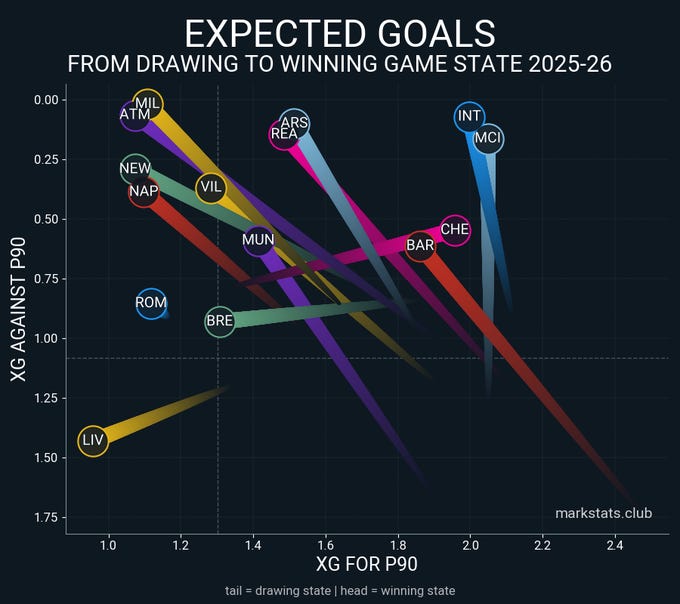
You can see that Liverpool are only a touch above neutral when drawing, then have an xG per 90 minutes figure of somewhere around -0.5 when they are leading. Neither is ideal but the latter shows why they often struggle to see out games.
Things get odder still if we break the data down between leading by one goal or having a margin of two, using Understat data. Liverpool’s expected goal difference in their model when up a goal is actually decent enough. It’s what occurs when they go further ahead that is beyond concerning. Arne Slot’s in-tray contains yet another problem to sort out.
His side have an xG margin of +0.81 per 90 minutes when one goal ahead this season. While nowhere close to the dominance Arsenal are enjoying (+1.98), it’s above what Manchester City have produced (+0.69). The current crop of Reds are only a shade behind their title winning predecessors too (+0.86).
If you’re ‘Slot in’, you should note that Liverpool have rarely been as defensively sound when leading by one as they are in 2025/26. Those of a ‘Slot out’ persuasion will highlight that the attack hasn’t been this dry at +1 since before Jürgen Klopp breezed into town. Where on your bed do you like to have your blanket?
Wherever we stand on the manager’s employment prospects, we should be able to agree that the balance between defence and attack in this game state is broadly fine. Here’s the same graph plotted for when two goals ahead (or more, though Liverpool haven’t led by three at any point in the 2025/26 Premier League).
Oh boy. Where’s my SLOT OUT placard and lack of control when posting on Twitter? I’m sure I’ve got a pitchfork in the shed from the Roy Hodgson days.
These numbers feel as inexplicable as they are inexcusable. The shot count is 26-13 in favour of the opposition at +2, with the xG per shots figures 0.16 and 0.11 respectively. Allowing more attempts than they take might be tolerable if they limited opponent chance quality while having high value opportunities on the break but that simply hasn’t been the case. Let’s review the evidence, with the following xG figures obtained via FBRef.
Liverpool 4-2 Bournemouth
Led by two goals: Minutes 49-64, plus 94 to Full Time.
xGD in period: -0.26
We can discount what occurred after Mohamed Salah sealed the win, as there were no goal attempts. In the other 15 minutes, Liverpool had four shots from no closer than 18 yards out that were collectively worth 0.19 expected goals.
They then conceded to the eighth highest xG value chance the club has allowed in league or Europe this season. Here’s the clip.
It was after this match that Slot clashed with Jamie Carragher in terms of how the team should play when winning. Both of Bournemouth’s goals were scored on the break.
“We are not going to a low block to defend,” Slot said. Has that idea persisted, Arne?
Newcastle 2-3 Liverpool
Led by two: Minutes 46-57. xGD: -0.17
We can keep this brief. The only shot in the match when the scoreline was 0-2 saw Bruno Guimarães emphatically beat Milos Kerkez to a Tino Livramento cross. Header, goal, 1-2.
St James’ Park was aflame with rage over the Alexander Isak saga and Liverpool were eventually forced to pinch a winner thanks to a teenager. File under ‘harder than it needed to be’.
Liverpool 2-1 Everton
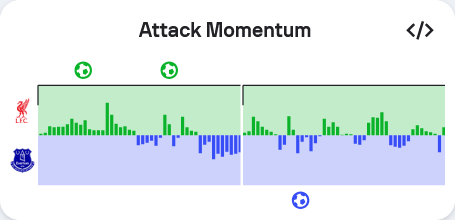
Led by two: Minutes 29-58. xGD: -0.40
This was better than the previous two instances in that the Reds did not concede an Opta-defined big chance when 2-0 up (or at all). The greater issue was at the other end, with just 0.21 expected goals produced in the final hour of the match.
Credit where it’s due, Everton only had two shots of tiny value once it went 2-1. None of their spells of positive momentum were too threatening.
Liverpool 2-0 Aston Villa
Led by two: Minute 58 to Full Time. xGD: -0.03
Considering Aston Villa followed this match with 11 consecutive wins in all competitions, this performance should probably be more highly rated.
Liverpool had the highest value chance of the 2-0 period and even that only came in at 0.09 expected goals. A Reds team facing Real Madrid three days later was clearly happy to see the game out with minimum fuss.
And as much as all of the examples here involve Liverpool being two goals to the good, that’s clearly a different scoreline when time is ticking away near full time rather than in the middle of the match. We’ll skip over the next example, at West Ham, as the Reds only scored their second goal in stoppage time.
Leeds 3-3 Liverpool
Led by two: Minutes 50 to 73. xGD: -0.71
Scratch that previous point about mid-game, actually. Or don’t, as the figure here rests squarely on the shoulders of Ibrahima Konaté. Without the penalty he needlessly conceded, Leeds had produced a solitary shot in over 20 minutes, a header from 14 yards.
Liverpool led the non-penalty xG while 2-0 up, if that’s any consolation. It isn’t, is it? You’re still thinking about the penalty.
Liverpool 2-0 Brighton
Led by two: Minute 60 to Full Time. xGD: +0.07
Behold, a positive xG difference when holding a two-goal advantage. It is possible after all, just not yet by a wide enough margin.
That said, the Reds’ two shots both came through fast break counter attacks, which is what we need to see more of in such situations. Getting Mohamed Salah (who missed them here) or anyone to convert them is the next step. Just imagine a three-goal lead, if you will. It could happen one day.
Tottenham 1-2 Liverpool
Led by two: Minutes 66 to 83. xGD: -0.20
Alexis Mac Allister unleashed an off target header in the 73rd minute of the match. Liverpool haven’t had a shot when 2-0 up since.
Tottenham followed the Argentine’s effort with four attempts of their own. What makes it remarkable is that they all occurred in the mayhem which resulted in their goal. The Reds were dealing with the threat the 10-men posed reasonably well until they massively didn’t.
Liverpool 2-1 Wolves
Led by two: Minutes 42 to 52. xGD: -0.98
That the worst xG difference occurred against the worst team feels very 2025/26. Almost too on the nose, if anything. The key moment was the Tottenham corner magnified, with a 0.15 xG shot saved before the 0.75 rebound was converted.
Once again, fine until they were not. Give it up for Liverpool FC this season, ladies and gentlemen.
Conclusion
Most of the time, things haven’t been too bad. Bournemouth are the top scorers of fast break goals this season. Newcastle completed ONE regular pass while 2-0 down, exploiting a long throw to get back into the game. Liverpool were a Konaté brain fart at Leeds and a Virgil van Dijk air-kick at Tottenham from perhaps escaping unscathed in those matches.
Even so, Liverpool have conceded 14.7 per cent of the total expected goals they have allowed in the (roughly) nine per cent of the season in which they’ve led by two. This is beyond sub optimal.
But why is it happening? One theory I had was that the Reds’ passing accuracy degrades as games grow tense with full time approaching, as that happened against Wolves. Swing and a miss; their completion rate across the above matches was identical in total as when they led by two. Only against Brighton did it drop by more than 3.8% in the 2-0 period.
Opposing teams will inevitable open up to try to get back into a game when losing too, which increases pressure on a confidence-shy backline. There is unlikely to be one root cause to this issue, as with everything this season. Slot’s life will certainly get a lot easier if this can be resolved though.
Like the subject of many recent newsletters, is this something of nothing or evidence of a deep underlying flaw?
Great read as always Andrew. For me this season it’s fitness related as the few times we have got a two goal lead we have expended a lot of energy to do so (mostly), and so probably take a physical breather from the mental relief of going two up and then struggle to summon the physical and mental effort required to keep pushing.
In terms of Slot overall, the game yesterday which I was lucky enough to attend definitely felt like a step backwards. I think the PL will continue to be a struggle and so for that reason, a bit like Rafa in 2005 and the Europa League with Klopp in 2016, the CL is going to be really important for him.
The performances in European games in those seasons gave the belief to fans that we had the right man. We didn’t need to worry (too much), about the relatively short term stuttering league form because they showed what they can do on the biggest stage of Europe.
Slot has a brilliant record in Europe with us, and our best performances this season have probably all been in the CL (Real, Frankfurt, Inter).
We still have a bit to do to get through the group in the top 8. If we don’t manage that then it ramps up the pressure even more.
If we can get to the semi finals or something with some more big performances against some of Europes best, then I think match going fans will stay with him into next season whatever happens in the PL.