
Have Liverpool Been Lucky With When They've Faced Teams?
Liverpool recently played Manchester City and Newcastle without Erling Haaland and Alexander Isak respectively. Let's assess how fortunate the Reds have been.
There is a rush to discredit success in football. Liverpool look set to win the 2024/25 Premier League thanks purely to Manchester City’s ageing side crumbling into the sea at the same time that Arsenal’s treatment room has looked more like Cook County General Hospital in ER.
Never mind that the Reds’ tally of 67 points with a +40 goal difference is the 15th best start after 28 games in the English top flight since 1992, the third most impressive by a side representing Liverpool. Their impending triumph must be thanks to the failings of others.
If not that, then Arne Slot’s side must have been incredibly lucky in some way. Despite 15 different players missing a collective 118 matches in all competitions, there is a narrative stating the Reds have not had injury problems. But even if they have enjoyed good fortune with the availability of their top men, maybe appointing a new head coach who “achieved 90 per cent player availability in every season at Feyenoord” had something to do with it?
Jürgen Klopp had very few failings as manager of Liverpool but running his players into the ground may have been one of them. Another suggested source of benefit to the Reds’ title charge has been that opposing teams have missed key players when lining up for their dose of Slotball.
This idea has come to the fore in the last two weeks, not without reason. The only Premier League match Erling Haaland has missed this season was Liverpool’s recent 2-0 win at the Etihad Stadium. He was absent for the same fixture in his debut campaign too; just admit you’re frightened of Virgil van Dijk, Erling. Nobody will laugh.
The Reds’ victory over City was followed by a home win against a Newcastle side that was missing Alexander Isak for just the third time in the league this term. That’s the second and third top scorers in the division whom Liverpool have recently avoided, the jammy blighters. Anthony Gordon’s red card last weekend means the Magpies won’t be able to call upon him in the forthcoming Carabao Cup final either.
As fortunate as these recent examples are, they need putting into context. Teams miss players all the time. City’s decline since autumn may have happened anyway but Rodri’s prolonged absence likely accelerated it, for instance.
To assess if Liverpool have been lucky, we will look at the average salary in the starting XIs each club has faced in the Premier League this season. While it’s not perfect, like any model, it stands to reason that the best players for each team are among their top earners.
Or, as in the case of Casemiro - the third highest earner in the Premier League, who was on the bench at Anfield - they just have the best agents. Quick, Sir Jim, cut the soup budget even further. Minor flaws notwithstanding, this method of rating opposition line-up luck should make for a decent starting point.
Salary data in football seems to be a largely guarded secret, unlike in American sports. This is the standard disclaimer when trying to analyse such matters.
We’ll be using the Capology data via FBRef, a percentage of which they openly admit is estimated. While not bulletproof, the figures are consistent for every team in the study. The renumeration hierarchies within squads should be mostly accurate, even if the pay packet specifics are a little off here and there.
The figures which follow relate to the average reported weekly pay of the players in each starting XI. For instance, when Liverpool faced Ipswich in their season opener, the salaries of Slot’s first competitive side ranged widely. The scale went from from £15k a week (Jarell Quansah) through to £350k (Mohamed Salah), but the average was £153,636. It is this figure which is the opening entry in the Tractor Boys’ ledger for our study.
Compiling this data for every Premier League match this season reveals that the Reds have faced the second lowest paid opposition sides on average. However, a deeper dive into the statistics helps explain why.
It feels like a big part of the ordering can be explained by the salaries of the teams themselves. Ipswich and Brentford have the two lowest average starter salaries, so logically they would play teams who pay more as they can’t face themselves. The reverse helps explain why high-paying Arsenal, Manchester United and Liverpool are at the bottom of the chart.
The presence of Southampton at the foot of the table when they are the third lowest paid Premier League side initially punctures a hole in this theory. But without a method to check easily, there could be a simple reason for this: teams rotate their side when facing by far the weakest team in the division.
As much as injuries forced his hand, Slot selected a line-up including Conor Bradley and Caoimhín Kelleher at St. Mary’s Stadium. This helped make it the Reds’ lowest paid Premier League XI of the campaign so far. Other clubs will have done similarly against the Saints to push them to the bottom of the chart.
A better way to measure which teams have faced weaker or stronger sides is to look at the opposition salary average for each match compared with the season overall. The Ipswich XI tackled by Liverpool in August were paid £11,252 per man, less than half of their season-wide figure. The Reds were heavy favourites regardless of who lined up against them that day, but by this measure they were handed another advantage.
Adding all of the differences from the average for each team gives us this chart.
This suggests Liverpool have been one of the luckier sides, though both Arsenal and City are on the same side of the dividing line. The notable movers are United, who were third bottom in the previous chart, with this method of assessment now painting them as one of the more unfortunate clubs. This must explain why the Red Devils dish out appalling performances week after week. They just can’t catch a break.
With wage bills differing wildly across the Premier League, some differences from opposition team averages can dwarf others. At the top paying clubs, the margin between their weekly salary mean and a lower paid line-up might be greater than what a smaller team shells out on wages in total.
To try to account for this, we can rank each club’s average starter wage by match for the season. The Reds, for instance, have ranged between £124,091 per player at Southampton up to £158,636 on five occasions. Remarkably, the best paid XI with the latter average wage started the one league game which Liverpool have lost this season. Money isn’t everything.
Averaging the rankings for the opposition salaries (where the lower number indicates a harder ride) shifts a few teams once again while retaining the broad strokes of our earlier chart. The notable finding here is that Arsenal have had easier opposition than City or Liverpool based on this version of the assessment.
The Gunners have had the fortune to face starting XIs among the bottom five in salary terms which Tottenham (ranked 23rd for the club), Liverpool and Chelsea (both 25th) have fielded this season. That’s three of their biggest games in any campaign, so to have played below-average line-ups is a distinct advantage.
Arsenal have played XIs ranked 23rd or lower for their respective clubs seven times in total, whereas that figure for Liverpool is eight and includes games against both Chelsea and City. However, the Reds’ group of underpaid opposing sides also features all three promoted sides when the salary advantage should not matter. The Gunners’ most notable margins have occurred in other, tougher fixtures, not against the clubs who will soon be returning to the Championship.
This may illustrate why Liverpool have a low figure in the Difference Between Salary Faced & Opposition Average chart. If they are facing underpaid versions of the most lowly paid clubs, that will drag an average a long way south. Perhaps it is the opposite of the Southampton principle; why risk a top player in a match against the leaders that you’ll almost certainly lose regardless?
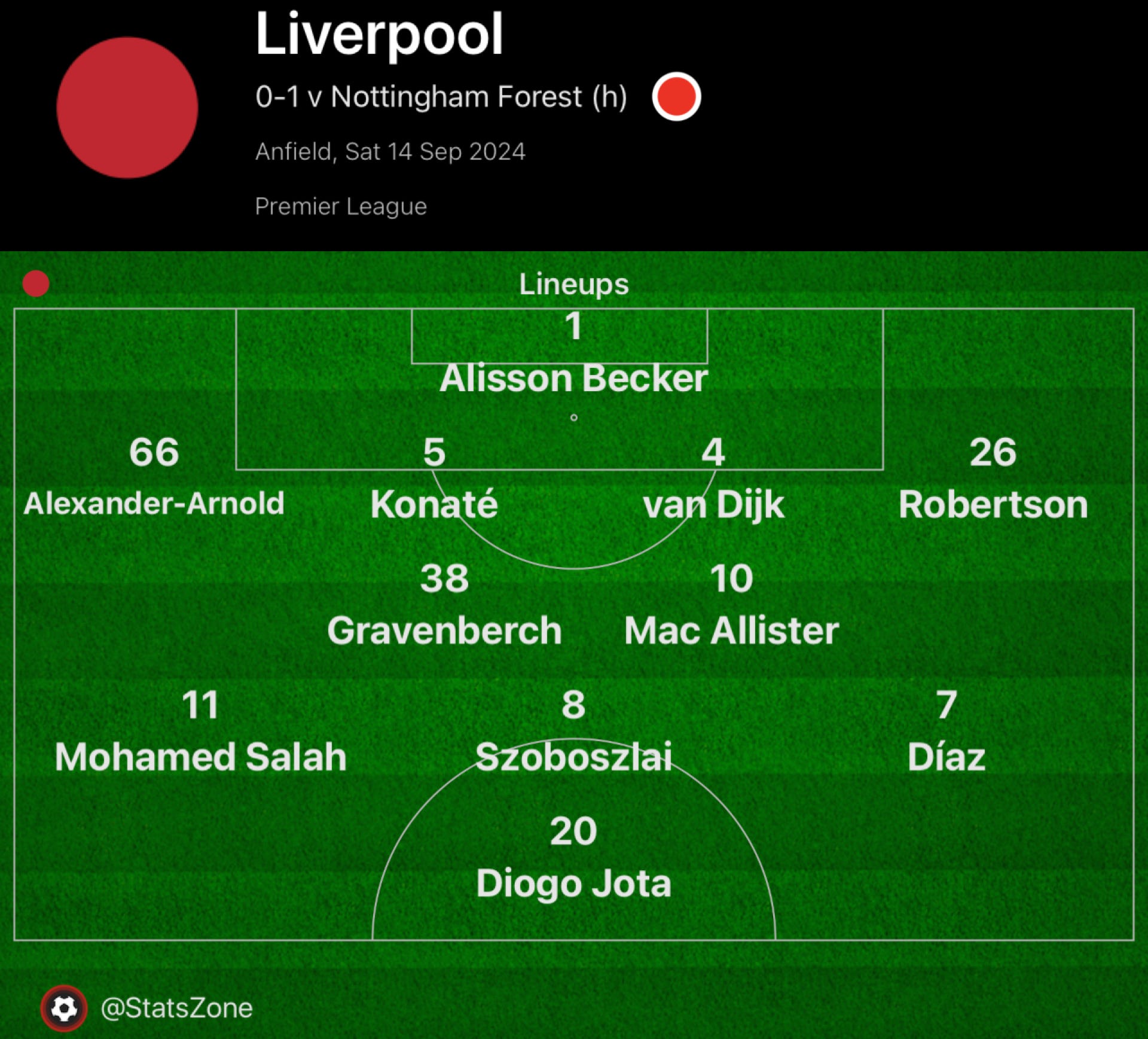
This method of rating opponents potentially helps put performances into context. The Forest XI which won at Anfield was the club’s fifth best paid side of the season, while the Wolves team which recently held Liverpool shotless in the second half was their second highest paid line up. When the Reds dropped two points at Villa Park, they were up against the most well renumerated group of players Unai Emery has selected in the 2024/25 Premier League.
In short, this is like anything in football. Yes, Liverpool have been lucky at times, but guess what? So has every other club. You can’t win a league by good fortune alone, as the Reds will amply prove within the next two months.
So what do you think? Is this the best way to assess luck in terms of opposition line ups?
I did think about looking at goals and assists but then that wouldn't account for defenders.