
Liverpool's Greatest Counter Threat May Now Be Their Biggest Weakness
Liverpool are the Premier League's masters of goals from counter attacks. Or they were, so what has gone wrong this season?
Liverpool have had two Premier League campaigns since the summer of 2011 in which they scored more than 11 per cent of their goals through Opta-defined fast breaks (counter attacks): 2019/20 and 2024/25. To say they have proven important is selling the idea shorter than the big short.
A line in a newsletter from last week showed the Reds are failing on that front this term. “Liverpool have scored just three fast break goals and are playing like they can’t do anything quickly, least of all tear up field to put the ball in the net.” They have since played well at Arsenal without doing anything to disprove this statement.
While their blazing hot breaks have cooled down this term, goals from counter attacks still represent a higher proportion of the Reds’ total in 2025/26 (9.4 per cent) than league average (6.1). Their greater concern is not scoring enough in total, but Arne Slot’s Liverpool have scored 14.4 per cent of their Premier League goals via fast breaks when the average across Jürgen Klopp’s full seasons was 7.9. Teams from Accrington up to Bayer Leverkusen have conceded seven times on the counter to the Reds in cup competitions in the previous 18 months too.
As with any aspect of the club this season, there are flaws in the picture, chinks in the armour. Klopp’s Liverpool were more efficient at converting their fast break shots, at 26.4 per cent to 18.7, with Slot’s side dropping from 21.2 last season to 12.0 in 2025/26.
This is a more notable shift, given 18.6 of counter attack shots in the Premier League find the net. The club with more top flight goals of this type than any other since 2011 has fallen below par. There is one man who looks most culpable for this disappointing trend.
This won’t be the revelation it would’ve been in years past. Boom, analysis, shock, fiver a month please, mic drop; sorry, no. Salah’s influence was so great in this regard last season that it still feels slightly shocking to blame him for this slump though.
He had 36 fast break shots in all competitions in 2024/25. If you add the totals of Liverpool’s second to fifth highest counter attack shooters, you only get to 41. No player created more in these situations than Salah either (13), albeit Cody Gakpo matched him. The former would be top for involvements on shots alone anyway.
Yes, yes, the Egyptian had the most playing time of anyone at the club too. As Salah was top on a per 90 minutes basis, with 0.26 created and 0.72 shot for 0.98 in total, that’s irrelevant. We’re all friends here, let’s just say you’d see Liverpool’s number 11 contributing directly to a counter attack shot once per game last season. It was truly phenomenal. And guess what?
Salah’s rate has gone up in 2025/26.
Mic drop, etc. The rates for the next tier of Liverpool players are in the same ballparks as they were last term, there’s just a few different names in there. So what has happened to Salah’s output if the numbers are broadly the same? Now it’s time to hand over your fiver to find out. Sorry about that.
The Reds’ 40 fast break shots in 2025/26 have generated 7.34 expected goals, a healthy average of 0.18 xG per attempt. Only five were converted, which highlights the issue in simple terms before we dig deeper.
With samples being small, no individual has underachieved by that much. What we can say is that Hugo Ekitike has scored twice from 10 shots (worth 2.1 xG) unlike Salah, who has converted just one of 12 (1.9 xG).
It isn’t just that the 33-year-old should’ve done better in total. He is on a run of 10 consecutive fast break shots that have gone begging, with only two put on target. Missing the goal when 3-0 down at Manchester City was effectively irrelevant as the match was gone. Failing to score when level with PSV Eindhoven was rather more consequential, both for the club and the individual seeing as Salah hasn’t started a Liverpool game since.
At least he tested opposition goalkeepers a couple of times after settling the 4-2 win over Bournemouth on the counter. Not one of the seven shots Salah has created in fast break situations - the joint-most along with Florian Wirtz - has been put on target, never mind converted.
This side of the equation is not his fault. Nonetheless, Salah’s direct involvement in counter attacks has generated 19 shots that were worth 3.3 xG for the reward of a solitary goal. The three other heavy contributors in the squad are broadly at par for output against their underlying numbers.
We could add another four efforts for which Salah played a role in the sequence without setting up the chance or taking the shot. That would increase the expected goal and shots on target totals by one apiece but the goal total remains static.
There have only been eight fast break sequences leading to a shot that didn’t involve Salah whatsoever when he was on the pitch, roughly one every two-and-a-half matches. The average xG value of those chances was half the Reds’ figure across their entire counter output too. For good or bad, this brand of attacking rests almost squarely on Salah’s shoulders when he features.
Even without starting since November, the veteran forward has shot or set up the four highest xG value fast break chances that went unconverted so far in 2025/26. Let’s review.
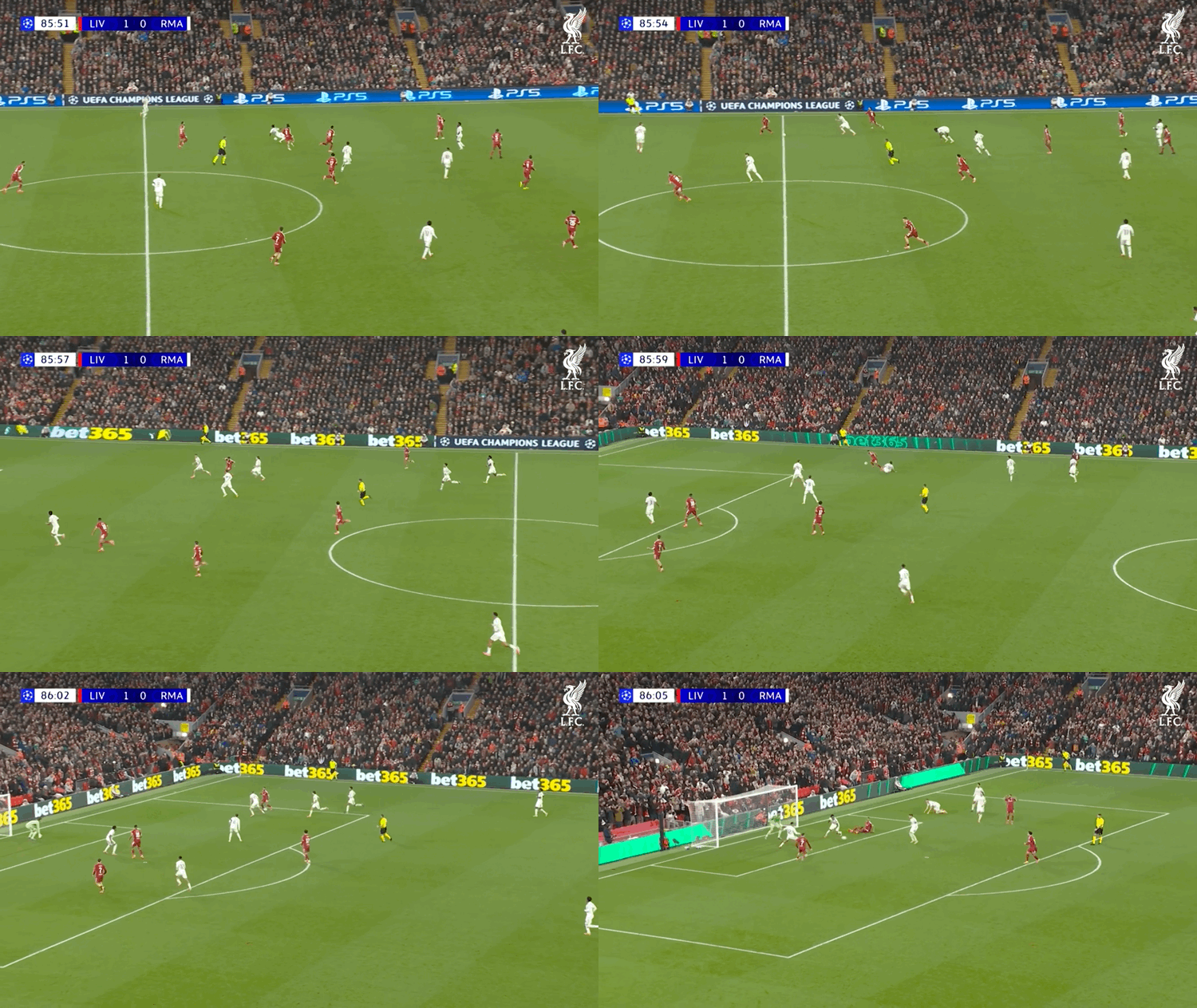
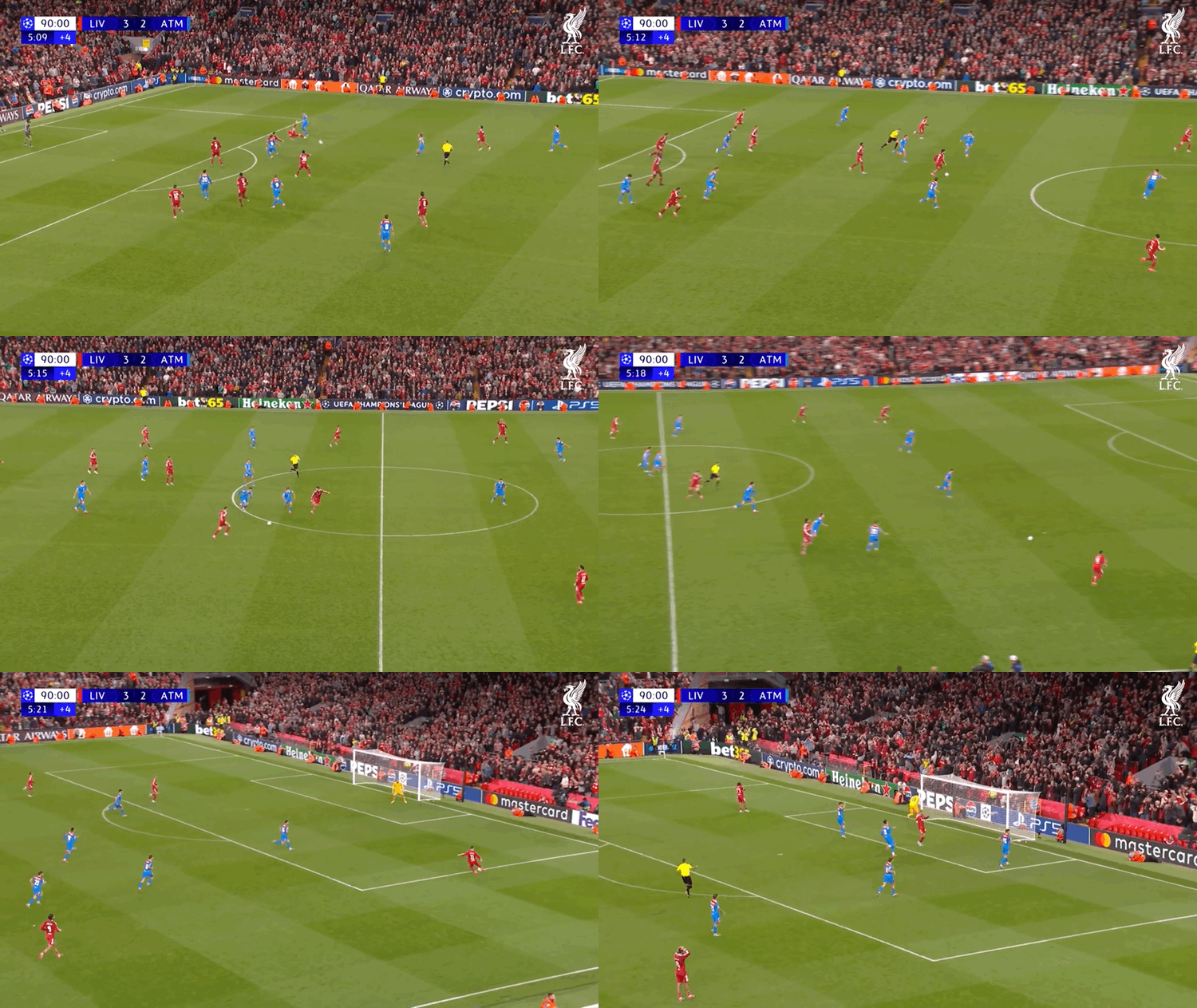
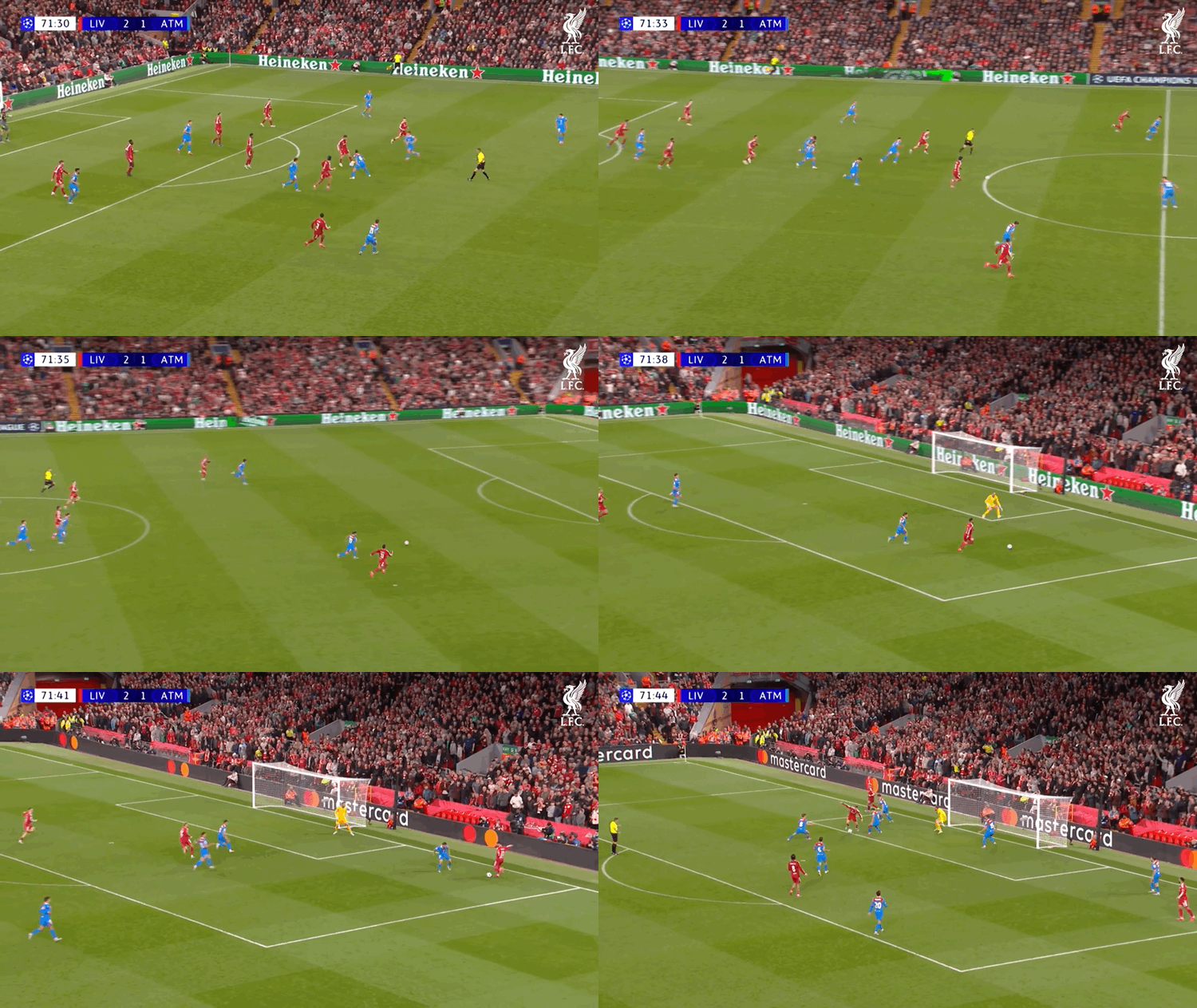
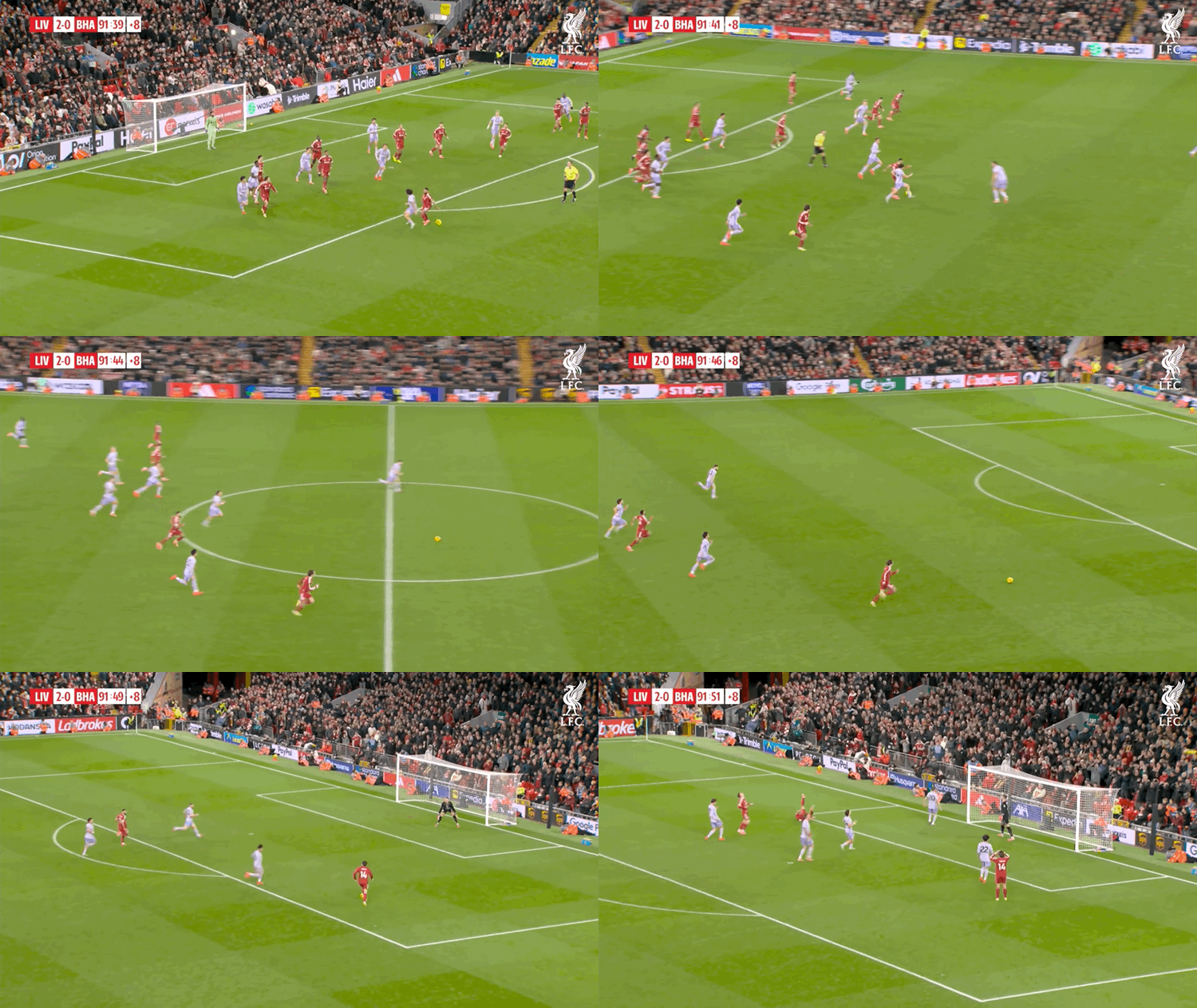
Aside from them mostly being against clubs from Madrid, what did you notice? These counter attacks were late in games, with three in the 87th minute or later. The two other fast break shots worth at least 0.3 xG this season were scored in the 35th (Frankfurt) and 42nd (Wolves) minutes respectively. Tired legs plus tired minds equals badly executed counters?
Gut instinct says converting late chances on the break wasn’t previously an issue for Liverpool but then Salah wasn’t 33 years old before either. Two of the above quartet were set up for Ekitike, with whom he’s still forming a relationship, while another was teed up by Federico Chiesa, who barely plays. Firmino, Mané and Salah this ain’t.
Even if this is a valid explanation for the missed opportunities, watch the clips again. Everything is a little off. Salah does well to create a chance against Real Madrid after initially dribbling into a cul-de-sac. The Ekitike header against Atlético is barely an opportunity at all, in truth. For the other two, the ball bounces shortly before reaching the shooter; that increases the difficulty, even if you’d like to think they’d still score. There’s untapped potential here.
Counter attacks need to be filed in Slot’s bulging folder for 2025/26 that reads ‘some issues but probably not far away from being fine’. He needs to think of a catchier title for it.
The bigger issue is whether he can fashion a functioning fast break attack that doesn’t rely upon his highest paid player. Liverpool have had six fast break shots that didn’t involve Salah in the 11 games since he last started a match for the club. Whether the player’s misfortune with output turns or not, the team’s ability to create and convert shots on the counter simply must improve for the better.
Salah's having a weird season, isn't he?!
Doing well at AFCON with Egypt 🤔